System Design

Before you jump on:
Disclaimer:This series is based on my research, not real-world experience. I’m learning and sharing as I go.
Introduction to System Design
System design is a crucial discipline that lays the groundwork for developing scalable, reliable, and maintainable software systems. It involves creating an architecture that specifies the components, modules, interfaces, and data management strategies necessary to meet specific requirements. The process of system design encompasses defining how various parts of the system interact and ensuring that they align with user needs and business goals.
HLD vs LLD
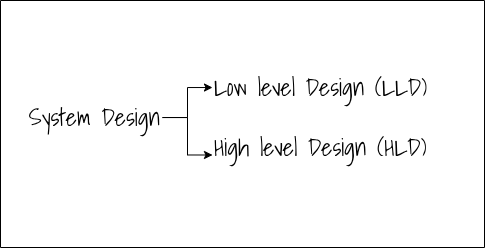
When we design a software, it's helpful to think in two stages: High-Level Design (HLD) and Low-Level Design (LLD).
High Level Design represents the overall architecture and structure of the system. Think of it like an aerial view of a city - you see the main areas and how they connect but not the exact buildings. It covers decisions like architectural style (microservices vs monolith), technology choices, and main interfaces.
While LLD zooms in on the detailed design of each component specified in HLD. Imagine walking into one building and examining floor plans, wiring, and room layouts. It defines specific classes, methods, database schemas, algorithms, and interfaces for each module. It includes detailed logic, flow of data, error handling, and security considerations.
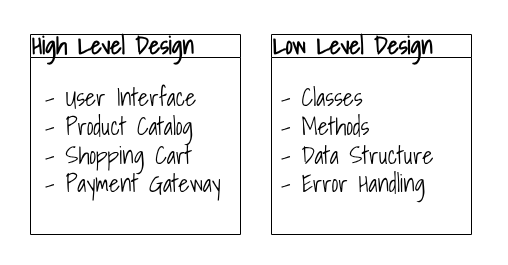
Thus;
HLD is created early in the design phase, turning requirements into a blueprint for developers to follow.
LLD acts as a guide for developers during coding to implement the system precisely as designed.
LLD are asked mostly for Junior level roles, it consist of OOPs, Design patterns, etc. HLD are asked for more senior roles. But it is always important to understand that a good system is a combination of a great LLD and HLD.
Key Components of System Design
The fundamental aspects of system design include several key components:
Architecture: This refers to the high-level structure of the system, illustrating how different components interact with one another. It can encompass various architectures, such as client-server, microservices, and monolithic designs.
Data Flow: Understanding how data moves within the system is essential. This aspect includes data input, processing, storage, and output, ensuring efficient data management throughout the system.
Scalability: The system's ability to manage increased load, either through vertical scaling (adding resources to existing servers) or horizontal scaling (adding more servers), is a vital consideration in system design.
Reliability: Consistency in performance under various conditions is paramount, often achieved through redundancy and failover mechanisms to minimize system failures.
Security: Protecting the system from unauthorized access and breaches is critical. This encompasses practices such as encryption, authentication, and regular audits to maintain data integrity and confidentiality.
Performance: Optimizing the system for speed and efficiency involves employing techniques like caching, load balancing, and database indexing to ensure responsive user experiences.
Maintainability: A well-designed system should be easy to update, debug, and extend, which contributes to its long-term sustainability and reduces the total cost of ownership.
APIs and Interfaces: Defining how different parts of the system communicate with each other and with external systems is crucial for seamless integration and functionality.
Common Pitfalls
Designing a system is like building a complex machine - one small mistake can cause hours of frustration, costly rewrites, or worst, a system that just can’t grow. Recognizing common design pitfalls early on can save us from future headaches and make our system robust and scalable.
1. Breaking Key Design Principles: The SRP and OCP Trap
When a module does too many jobs, or can’t be extended without rewriting code, your system becomes a tangled mess that’s hard to maintain or scale. That’s what happens when components violate the Single Responsibility Principle (SRP) and the Open/Closed Principle (OCP)
2. Overlooking Modularity, Simplicity, and Flexibility
Systems that look like a tangled mess of tightly coupled parts are nightmares to understand or fix. Complexity breeds confusion - and confusion means slower development and costly bugs. Prioritizing modularity allows you to build clean, interchangeable parts that talk simply to each other.
3. Forgetting Scalability and Performance Early On
One common trap is to treat scalability as an afterthought. But waiting until your app is live and users are pounding on it to think about load balancing, caching, or data partitioning is like waiting for your car’s engine to overheat before checking the radiator. Bottlenecks become invisible monsters that slow down your system and frustrate users.
4. Learning from Real-World Case Studies
The best lessons often come from lived experience. By examining successful systems - how Netflix handles massive streaming load or how WhatsApp guarantees message delivery (Both cases are explained below)- we get insights into overcoming integration and deployment challenges. These real-world stories show that even complex systems can be reliable and performant when solid design principles are applied.
Importance of System Design
The significance of system design cannot be overstated. A well-structured system design serves as a blueprint that guides the implementation process, ensuring that all system elements align with the intended architecture and requirements. By focusing on key design principles such as separation of concerns, encapsulation, and resilience, system designers can create robust systems that are not only functional but also adaptable to future growth and technological advancements.
Moving forward, their are different types of design patterns and SDLC lifecycle process. Understanding each in depth is really crucial for better understanding.
Arigato!